
Trusted Cognitive-Behavior Therapy in Los Angeles
We provide specialized Cognitive-Behavior Therapy rooted in scientific research, helping individuals overcome challenges with proven treatment methods. All of our clinicians are trained and practice with the most current treatments supported by scientific empirical research. At CBA, all of our treatments are based on proven treatment methods.
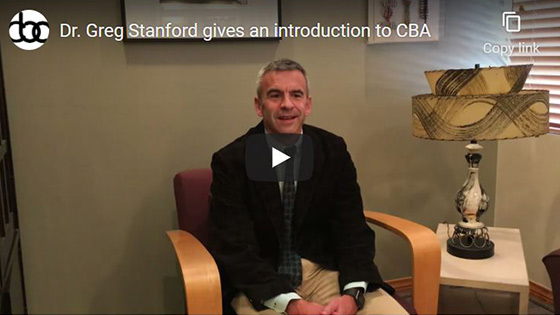
Dr. Stanford gives a brief introduction to our practice here at CBA.
Find out about our mission, our philosophy, and what you can expect from our professional clinicians.
WHAT SKILLS SHOULD YOUR COGNITIVE-BEHAVIORAL THERAPIST HAVE?
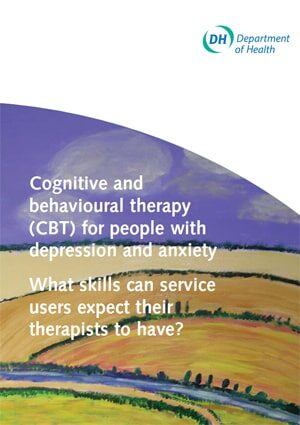
Have you ever wondered what skills your therapist should have? Read this pamphlet distributed by the National Institute for Mental Health in England on what skills your cognitive-behavioral therapist should have.
Watch the video below to further understand how to qualify a therapist.
For up-to-date news about psychological research, CBA, or the Cognitive Behavior Therapy Institute, follow our Facebook page below!
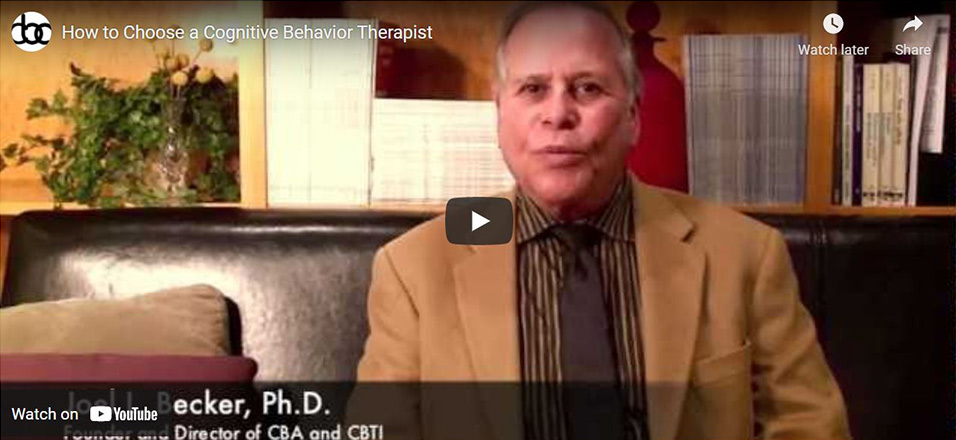
In this video, Dr. Joel Becker discusses what basic questions you should ask when selecting a qualified cognitive-behavioral therapist.
Cognitive Behavior Therapy Institute is approved by the American Psychological Association to sponsor continuing education for psychologists. Courses can be taken by the general public without the continuing education component. The Cognitive Behavior Therapy Institute maintains responsibility for all programs and their content.
UPCOMING LIVE WEBINAR:
Moral Scrupulosity OCD: Am I a Bad Person?
Friday, June 5, 2026
9:00AM - 10:30AM PDT
Moral scrupulosity is a subtype of obsessive-compulsive disorder (OCD) in which a person fixates on behaving "correctly" relative to their own moral compass or relative to society's standards. Moral scrupulosity OCD often combines with or underlies other subtypes of OCD. In many cases, moral scrupulosity OCD is a "primary mental" form of OCD in which compulsions are hidden mental processes. Because of this, moral OCD is often overlooked and can even mask as a highly self-critical form of depression. Exposure with response prevention (ERP) is an effective treatment for moral OCD. In this webinar, Drs. Emily Owens and Joel Becker will introduce a CBT conceptualization of moral OCD, review research on treatment for this OCD subtype, and teach effective treatment techniques grounded in ERP, cognitive restructuring, and Acceptance and Commitment Therapy (ACT).
Emily Owens, PhD, (she/her) is a clinical psychologist who specializes in CBT for severe mental illness. Dr. Owens is passionate about training mental health care professionals in effective methods of CBT and supervises pre-doctoral students as an assistant Clinical Professor at UCLA Department of Psychology. Dr. Owens is a Diplomate of the Academy of Cognitive and Behavioral Therapies and serves as Co-Director of Communications for the North American CBT for Psychosis Network (NACBTpN).

Emily Owens, PhD.
Joel Becker, PhD, (he/him) is the founder and clinical director of Cognitive Behavior Associates. With over 50 years of expertise in CBT, Dr. Becker enjoys his work as a supervisor and Clinical professor at the UCLA Department of Psychology. Dr. Becker recently became a Fellow of the Association of Behavioral and Cognitive Therapies. He is additionally a Diplomate, Fellow, and Board Member for the Academy of Cognitive and Behavioral Therapies.
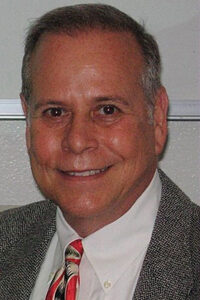
Joel Becker, PhD.
Webinar objectives:
- Name two common presentations of moral scrupulosity OCD.
- Recall Kohlberg's stages of moral development and how this interacts with moral scrupulosity OCD.
- Describe two interventions for moral scrupulosity OCD.
1.5 CE credits provided
Drs. Emily Owens and Joel Becker have not received any commercial support for this program or its contents and will not receive any commercial support prior to or during this program.
Cognitive Behavior Therapy Institute (CBTI) is approved by the American Psychological Association to sponsor continuing education for psychologists. CBTI maintains responsibility for this program and its content.
Joel L. Becker, Ph.D., Founder and Director
Click here to download a printable PDF flyer.
UPCOMING LIVE WEBINAR:
Radically Open DBT for Disorders of Overcontrol
Friday, May 9, 2025
9:00AM - 10:30AM PDT
*A recording will be made available for those who can't attend live
Presented by Reina Remigio, PhD, Tim Barry, LCSW.
About Presenters:
Reina Remigio, PhD, (she/ze) is a clinical psychologist, who is passionate about and specializes in working with individuals, couples, and families with overcontrolled coping (OC) styles and internalizing disorders. Dr. Remigio supervises pre- and postdoctoral students in community mental health and as a Wright Institute Adjunct Clinical Services Faculty focusing on OC. She is Level 3 intensively trained in Radically Open Dialectical Behavior Therapy (RO DBT) and leads the RO DBT Trauma Special Interest group.

Reina Remigio, PhD.
Tim Barry, LCSW, (he/him) is a clinician with over 20 years of experience working across the spectrum of mental health levels of care. In addition to providing individual, couples, and family therapy- Tim has been an adjunct lecturer at University of Southern California Dworak Peck School of Social Work. Tim is Level 3 intensively trained in Radically Open Dialectical Behavior Therapy (RO DBT). Tim co-facilitates two RO DBT Skills Classes.
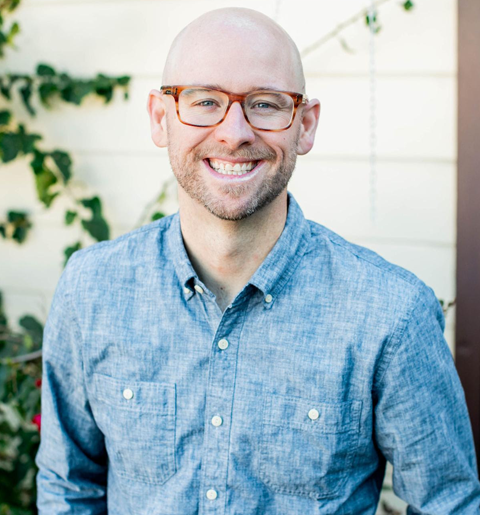
Tim Barry, LCSW
About the webinar:
Radically Open Dialectical Behavior Therapy (RO DBT) is an evidence-based framework informed by 20+ years of translational research designed specifically for overcontrolled coping (OC) and internalizing disorders, which can present as symptoms such as, overthinking, masking, rigidity, and emotional loneliness, and mental health disorders, such as refractory depression, chronic anxiety, restriction-based eating disorders, and obsessive compulsive personality disorder. Overcontrol and internalization are at times colloquially referred to as invisible or silent suffering, and consequently, those with this coping style may not seek out or receive care, which can be detrimental to overall health, or even life-threatening. The webinar will provide an overview of the development and structure of RO DBT treatment, including the primary treatment targets. Additional topics include radical openness, biosocial theory of maladaptive overcontrol, and social signaling as a key mechanism of change.
Webinar objectives:
- Define radical openness in RO DBT and list 3 general steps in the practice of radical openness.
- Identify the core issue as per RO DBT framework.
- Name the primary treatment targets.
Dr. Remigio and Tim Barry have not received any commercial support for this program or its contents and will not receive any commercial support prior to or during this program.
1.5 CE credits provided.
Click here to download a printable PDF flyer.
Check Out our YouTube Channel
Check out our YouTube Channel for educational and informative videos. Please Follow our channel to learn more!
Sign Up to Stay Updated
Sign up to receive our newsletter! Please join our mailing list to get updates, special offers, and more. Simply click the button below to be added to our list.
follow us on facebook
To learn more about Cognitive Behavior Therapy and the latest research, follow us on Facebook!